Time: 2026-03-11 04:46:42
In today's construction industry, light steel structur houses are gradually becoming the preferred choice for residential and light commercial buildings due to their high efficiency, environmental friendliness, and flexibility. However, the prefabrication process of light steel frame houses requires extremely high precision. Any assembly deviations or dimensional errors can not only affect the structural safety of the building but also increase subsequent construction costs. Therefore, how to improve the processing and assembly precision in the prefabrication process of light steel frame houses has become a core issue of concern in the industry.
The first step in improving precision begins in the design phase. In the prefabrication of light steel frame houses, the design team must ensure that the dimensions and connection methods of each component have undergone rigorous calculation and verification. The application of modern BIM (Building Information Modeling) technology provides strong support for precision control. Through the BIM system, designers can simulate the component assembly process and identify potential deviations and conflict points in advance. For example, at the connection of roof trusses or wall panels, the BIM model can accurately display bolt hole positions and component spacing, thereby reducing the possibility of on-site adjustments.
At the same time, material properties should be fully considered during the design phase. Although light steel profiles are high in strength, they are prone to slight deformation during processing and transportation. Therefore, the allowable deviation for each component must be clearly defined in the design documents, and rigorous dimensional verification must be performed before factory processing to ensure that the actual components match the design parameters.
The quality of the materials themselves directly affects the assembly precision of light steel frame houses. High-strength, low-deformation light steel profiles remain stable during cutting, welding, and punching, thus reducing the accumulation of errors. Furthermore, surface treatment and rust prevention processes are also crucial, as uneven galvanizing or spraying can lead to uneven component interfaces.
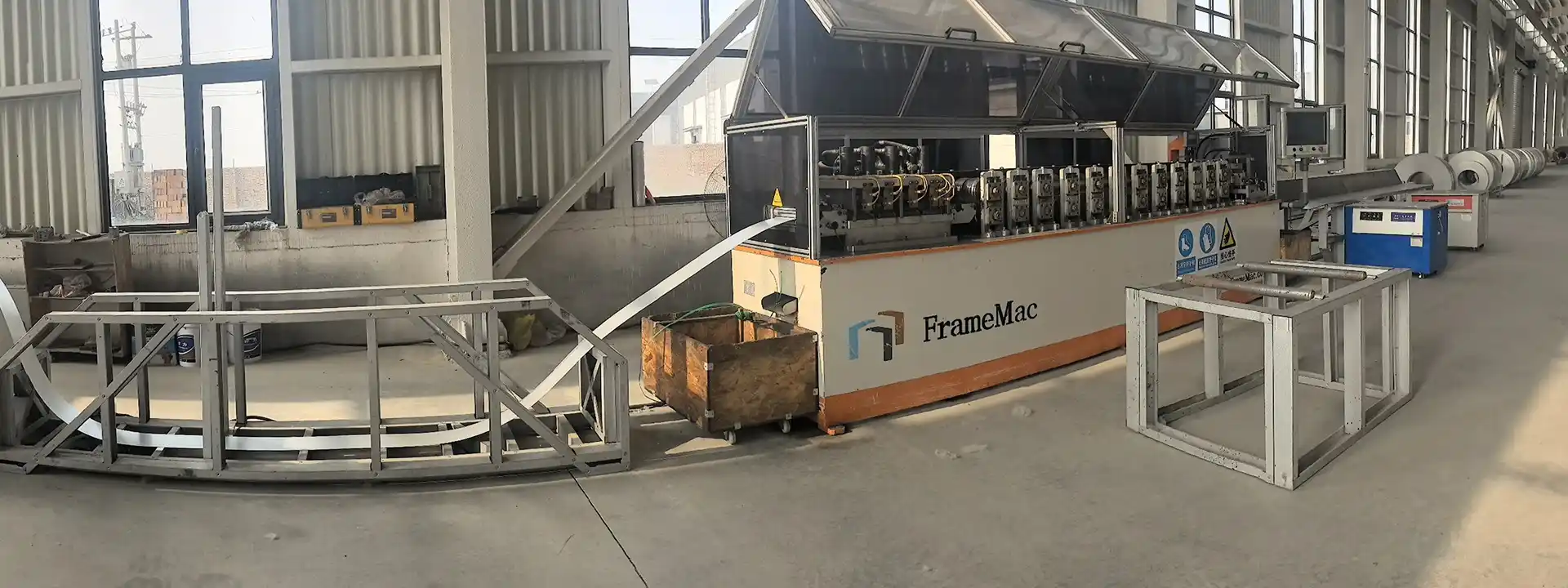
In the processing stage, using CNC cutting and automated punching equipment is an effective method to ensure precision. Compared to traditional manual cutting, CNC equipment can precisely control the cutting angle, hole position, and length according to preset design parameters, with errors controlled within the millimeter range. Especially in the processing of long-span beams and multi-segment wall panels, automated equipment can ensure the consistency of each component, reducing on-site assembly difficulties from the outset.
The assembly accuracy of prefabricated components depends not only on processing precision but also on the assembly process itself. To ensure smooth on-site connection of each component, companies should establish standardized assembly processes and promote the concept of modular assembly. Dividing the building into controllable modular units, pre-assembling and dimensionally verifying each unit in the factory before transporting it to the site for overall assembly, can significantly reduce cumulative errors.
Simultaneously, the on-site assembly team must strictly adhere to installation specifications. For example, during the hoisting of wall modules, laser levels and distance measuring devices should be used to monitor position and verticality in real time, ensuring flat and tight connections between modules. This not only improves construction efficiency but also reduces the manpower and material costs associated with secondary adjustments.

Continuous quality inspection and data feedback are crucial in the prefabrication of light steel houses. Companies can establish a comprehensive inspection system to conduct precision checks at every stage, from material arrival, processing, and transportation to on-site assembly. Common methods include laser measurement, 3D scanning, and precision measuring instruments to ensure that each component meets design standards.
Furthermore, establishing a data feedback mechanism can help companies continuously optimize production processes. For example, when frequent deviations in hole positions are found in a batch of components, the production department can immediately analyze the cause—whether it's equipment wear or improper process parameter settings—and make adjustments. Through this closed-loop management, the overall precision of prefabricated light steel houses will continuously improve in each round of production.
While technology and equipment are important, personnel quality is equally crucial for ensuring precision. Companies should regularly train designers, operators, and on-site construction personnel, ensuring they master the latest processing technologies, assembly processes, and the use of measuring tools. In addition, cultivating a culture of continuous improvement in quality, ensuring that employees at every stage recognize the value of precision to building safety and customer satisfaction, is an indispensable condition for achieving high-precision production.
With the development of Industry 4.0, the application of digital and intelligent technologies in the field of prefabricated light steel houses is becoming increasingly widespread. For example, using sensors and IoT technology, the processing status and transportation conditions of components can be monitored in real time, promptly identifying potential deviations. Automated assembly robots and intelligent hoisting systems can also achieve high-precision module docking on-site. These technologies not only improve production efficiency but also provide unprecedented reliability in precision control.
The improved precision of prefabricated light steel frame houses is the result of collaboration across multiple stages, including design, materials, processing, assembly, and management. Only by comprehensively optimizing every step from initial design and material selection to automated processing, standardized assembly, and continuous quality monitoring can companies achieve high-precision production of light steel frame houses, ensuring building safety and aesthetics while reducing costs and construction risks. With the increasing prevalence of digital and intelligent technologies, the precision control of light steel frame houses will reach a new level, providing more efficient and reliable solutions for the modern construction industry.
Contact Now