Time: 2026-06-22 01:37:58
When nature unleashes its fury in the form of earthquakes and hurricanes, buildings must do more than stand—they must absorb, deflect, and survive. Traditional construction materials like wood and concrete have well-known limitations under extreme stress. Light steel frames, engineered with precision and backed by modern structural science, offer a superior solution for regions prone to these dual threats. This article explains exactly how light steel framing systems resist seismic forces and high winds, and why HBFRM STEEL’s engineering approach makes a measurable difference in life safety and property protection.
Earthquakes impose sudden lateral and vertical loads on a structure. The secret to surviving them lies in ductility—the ability of a material to deform without brittle failure. Steel is inherently ductile, but light steel frames take this further with specific design principles.
A properly designed light steel frame creates a continuous load path from the roof to the foundation. Steel studs, tracks, and bracing panels act as shear diaphragms that distribute seismic forces evenly. Unlike wood, which can split at fasteners, steel connections remain intact under cyclic loading. The result is a building that sways predictably rather than collapsing abruptly.
Advanced moment-resisting connections allow beams and columns to rotate at joints, dissipating energy through controlled deformation. HBFRM STEEL incorporates pre-engineered moment frames and diagonal steel strap bracing that yield during a quake, absorbing energy like a shock absorber. After the shaking stops, the steel returns close to its original shape—a property called elastic recovery that wood cannot match.

Hurricanes combine extreme wind pressures, flying debris, and prolonged uplift forces. Light steel framing excels in all three challenges due to its material strength and fastening system.
Steel has a high strength-to-weight ratio, meaning it can resist uplift without needing massive mass. The key is the connection detail: every steel stud is screw-fastened to track, and the track is anchored to the foundation with engineered hold-downs. HBFRM STEEL uses self-drilling screws with verified shear and pull-out values, achieving uplift resistance that meets or exceeds ASCE 7 requirements for hurricane-prone zones.
During a hurricane, debris impact is a primary cause of structural failure. Light steel frames are non-combustible and do not rot, but more importantly, the steel studs—typically 18 to 14 gauge—provide a tough barrier. When combined with impact-resistant sheathing, the wall assembly can stop a 2x4 timber traveling at 50 feet per second (the standard missile test). Steel also does not warp or swell from moisture, so the structure maintains its integrity even after days of rain.
To fully appreciate the performance of light steel, a direct comparison clarifies why it is the preferred choice for disaster-prone regions.
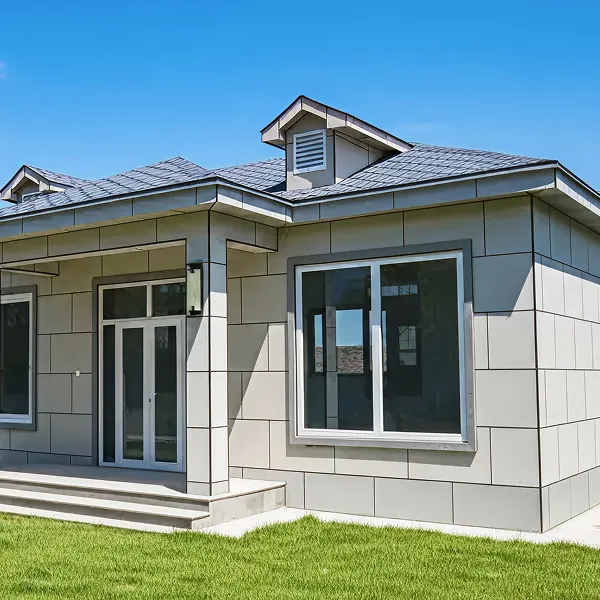
Not all light steel frames perform equally. The difference lies in design methodology, material specification, and quality control. HBFRM STEEL uses structural-grade galvanized steel (minimum G90 coating) to ensure corrosion resistance for decades. Every frame is designed using advanced finite element analysis (FEA) to model seismic and wind loads specific to the project location. Additionally, HBFRM STEEL provides pre-engineered connection details that have been tested in third-party laboratories, giving contractors and building owners proven performance data rather than theoretical estimates.
By choosing HBFRM STEEL, you are not just buying steel studs—you are investing in a comprehensive engineering solution that meets or exceeds the latest International Building Code (IBC) requirements for earthquake and hurricane resistance.
Yes. Light steel framing is widely used for residential construction in Florida, Texas, and the Caribbean. With proper bracing and tie-downs, these homes withstand Category 5 hurricane winds reliably.
Steel does conduct heat, but modern building science solves this with continuous insulation and thermal break strips. HBFRM STEEL designs incorporate these details to achieve energy performance equivalent to or better than wood-framed walls.
With proper galvanization and maintenance, a light steel frame can last over 100 years. The steel does not rot, warp, or succumb to insects, so the structure remains sound far beyond typical wood or concrete building lifespans.
In regions where earthquakes and hurricanes are a reality, light steel frames offer a built-in safety net—engineered flexibility, unyielding strength, and enduring reliability. HBFRM STEEL brings decades of expertise to every project, ensuring that your structure can face nature’s worst and still shelter its occupants. Whether you are designing a commercial complex or a family home, consider the advantages of light steel framing as your first line of defense.
Contact Now